
Who Is Jesus Calling to Speak?


“God is spirit, and his worshipers must worship in the Spirit and in truth.”
— John 4:24
These words were spoken by Jesus, not to the religious hierarchy or even His own disciples, but to a woman alone who stood at the margins of both society and religious respectability.
She was a Samaritan woman who carried a complicated personal history.
And yet Jesus chose her as the person with whom he would have one of the most profound theological conversations recorded in the Gospels.
He taught her. He challenged her. He revealed his identity to her.
And then she went back into her community and told them about Jesus.
This encounter should make us pause.
What if the Church has become so preoccupied with defining who is authorised to speak that we have forgotten to ask who Jesus has actually called to speak?
THE WOMAN JESUS CHOSE
John 4:1–42 is an uncomfortable passage of Scripture for any church that prefers carefully controlled boundaries.
Jesus did not merely tolerate the Samaritan woman. He engaged with her. He crossed ethnic, social and gender boundaries to have a theological conversation with her. He took her questions seriously. He spoke to her about worship. And he revealed himself to her as the Messiah.
She did not then need to acquire recognised training or hold an institutional position to be effective in sharing Jesus with others.
She encountered Christ.
And that encounter became a witness.
The point is not that theological formation or accountable leadership are unnecessary. The Church does need wise, mature and accountable leaders. Scripture matters. Sound teaching matters.
Discernment matters.
But John 4 should cause us to ask whether our structures can sometimes become so elaborate that they obscure a simple reality:
People who encounter Jesus are called to bear witness to him.
The woman at the well left Jesus’ presence carrying a powerful testimony.
THE COMMISSION FOR ALL DISCIPLES
Jesus’ final commission was given to his followers: “Go and make disciples of all nations.”
The command is not framed as a commission to a later class of professional religious leaders. It is given to disciples who have encountered the risen Christ and are being sent into the world as witnesses.
The New Testament presents a Spirit-empowered community in which women and men pray, prophesy, teach, serve, witness, exercise spiritual gifts and participate in the mission of the Church.
The central question, therefore, is not simply:
Who holds the office?
It is:
Who has encountered Christ, received the Spirit, been gifted by God and been called to proclaim the gospel?
Whenever the Church places enormous energy into establishing and protecting its internal structures, there is a danger that the structures themselves become the centre of Christian life. And when that happens, the Great Commission can quietly be reduced.
Instead of asking:
How do we most effectively share the gospel?
We can sometimes begin asking:
Who is permitted to preach?
Who is permitted to lead?
Who is permitted to teach?
Who is permitted to make decisions?
These questions can become spiritually dangerous when they consume more attention than the question Jesus actually gave us:
Are we making disciples?
WHEN OUR INTERPRETATION OF PAUL BECOMES A BARRIER
Some corners of the Church place considerable emphasis on Paul’s instructions when determining the roles women and men may exercise within Christian communities.
The question is not whether we should listen to Paul, but how we should interpret Paul in light of the whole New Testament witness to Jesus and the work of the Spirit.
Paul and other New Testament writers depict women as significant participants in the life and mission of the early Church.
Women pray and prophesy.
Priscilla helps instruct Apollos.
Phoebe is commended by Paul and entrusted with significant responsibility.
Junia is named among those highly regarded in the apostolic community.
These passages do not make every question about church leadership simple.
They do, however, make it difficult to argue that women are merely passive recipients of Christian ministry.
WHAT MIGHT WESTERN CHRISTIANITY LEARN?
What happens when a church or denomination becomes so focused on determining who cannot lead or speak that it stops asking what God has actually gifted people to do?
Are we in Western churches seeking to recognise the Spirit’s gifts, or are we focused on policing the boundaries around them?
The global Christian Church is enormously diverse in the ways that believers’ worship and faithfully share Christ with others.
Some of the most evangelistic Christian networks today are found among women in West, Central, Southern and East Africa who are living out their vibrant, Spirit-filled and practical faith at the grassroots level. Many of these women are also theologians, pastors, evangelists, church leaders and prayer warriors.
Their faith and Christian witness should not be reduced to debates about gender.
What might the Western Church today learn if it stopped assuming that it was the theological centre of Christianity?
WHO IS LISTENING TO JESUS?
The woman at the well did not leave Jesus’ presence carrying a theological qualification. She left carrying a testimony.
She had encountered Jesus.
She had heard him.
She believed him.
And she went back to tell others who he was.
Perhaps the question facing the Church is not:
“Who are we prepared to allow to speak?”
But instead, the more important question:
“Who is Jesus calling to speak?”
Does worshipping in Spirit and truth require the courage to recognise the answer, even when some of the people Jesus is calling are stuck behind roadblocks that have been constructed in his name?

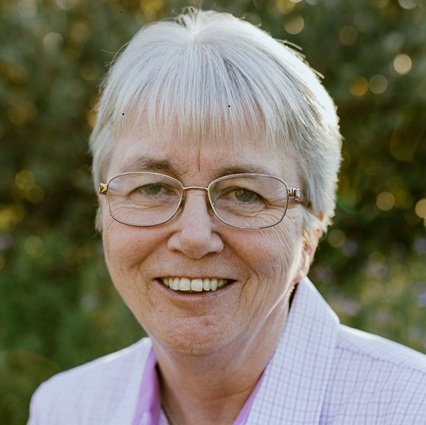
Philippa Cleall is an author, qualified schoolteacher and counsellor. She has been a member of different churches in Australia over the past 40 years, but has also greatly enjoyed worshipping at Christian churches in Zambia, Tanzania, and Kenya during this time. She is looking forward to listening to voices singing together in heaven one day from all tribes, tongues, and nations who acknowledge Jesus as their Saviour and Lord.















Comments