
At the table with Jesus & foreigners


Sermon given by Lily Strachan at The Bridge Church Macquarie Park on Sunday, 4 October, 2026.
***
Let me begin with that fateful phrase, “Please don’t judge me, but ...”
So, here I go: Please don’t judge me, but I love politics. I am a political junkie. I’m not a member of a political party, I just find thinking, talking, and reading about politics and policies genuinely interesting. I studied politics and law at university, and I grew up in a household where we talked openly about what was happening in the political realm. My parents had pictures of politicians on the fridge along with pictures of the kids. I host election parties with friends when there is a federal or state election – sometimes even when it is another country’s election. It’s a great excuse for a party. We don’t all vote the same, and it’s a great time to engage together in the cut and thrust of what’s happening in the country and the world.
Well, what’s the most contentious policy being debated right now? I think it’s immigration. In 2018, the Guardian said the following, and I think it could be true of any moment in the last 60 years.
“The debate about migration rarely remains within the narrow confines of the number or origin of new people seeking to come to Australia to live. Rather it spills ... into all areas of public debate: to arguments about road congestion and house prices, to the availability of resources such as land and water, to social debates about integration, religion, and English as Australia’s primary spoken language. Migration is not just about those who arrive but runs to national character: who is an Australian and who will become one.” (The Guardian article by Ben Doherty and Nick Evershed, 24 March 2018)
But this isn’t a political podcast. We are at the table with Jesus, and I’ve been invited to help us think about Jesus at the table with foreigners. Today we will spend some time in Matthew’s gospel considering how Jesus welcomed people of different nationalities. First, let’s consider God’s plan for the nations.
***
I remember my first year of Bible college and being a little concerned by how often Jesus engaged with his people Israel rather than those people who weren’t Jewish, the Gentiles. For the saviour of the world, he lived in a fairly small Jewish world. Jesus was born in David’s town of Bethlehem, died in Jerusalem, and spent most of his life and public ministry in Judea and Galilee. He never travelled to the great cosmopolitan cities of Rome or Athens or Alexandria. He hung out in synagogues, interacting with Israel’s teachers of the law, and discipling twelve Jewish followers. It’s understandable if you, like me, are a little perplexed. Wasn’t Jesus supposed to have come for all people? To reach the Gentiles as well as the Jews?
In both the Old and the New Testaments, the Bible claims that God shows no favouritism. But sometimes, I wonder. Afterall, God chooses Israel – he calls Abraham to father his nation, he chooses the patriarchs descended from Abraham, he chooses the judges, kings, & prophets, to protect and minister to his people.
But the Scriptures also make perfectly clear that God’s very choice of Israel to be his special nation, would be the way in which God would bless the people of the whole world. God’s plans are universal, but they begin with the particular.
In Genesis 12, God makes these famous promises to one particular man, Abraham: “2 I will make you into a great nation, and I will bless you; I will make your name great, and you will be a blessing. 3 I will bless those who bless you, and whoever curses you I will curse; and all peoples on earth will be blessed through you.”
God’s plan from the beginning was that Israel would be a light to all nations, drawing them to Israel’s God – the one true God.
From the beginning, God instructed Israel to include and care for the stranger and foreigner. Not just to care, but to welcome them to their table, their feasts. In Deuteronomy, we see God’s love for the foreigner in the detailed laws of the torah.
In Deuteronomy 10:19, God says, “you are to love those who are foreigners, for you yourselves were foreigners in Egypt.”
In Deuteronomy 16:11-12, at the Festival of Weeks, God’s people are instructed to, “rejoice before the Lord your God at the place he will choose as a dwelling for his Name—you, your sons and daughters, your male and female servants, the Levites in your towns, and the foreigners, the fatherless and the widows living among you. Remember that you were slaves in Egypt and follow carefully these decrees.”
Deuteronomy 24:19-22 instructs the Israelites to generously provide for the foreigner: “When you are harvesting in your field and you overlook a sheaf, do not go back to get it. Leave it for the foreigner, the fatherless and the widow, so that the Lord your God may bless you in all the work of your hands. When you beat the olives from your trees, do not go over the branches a second time. Leave what remains for the foreigner, the fatherless and the widow. When you harvest the grapes in your vineyard, do not go over the vines again. Leave what remains for the foreigner, the fatherless and the widow. Remember that you were slaves in Egypt. That is why I command you to do this.”
The Israelites are to remember that they were foreigners too, enslaved in Egypt, rescued by Yahweh. They are not superior to the foreigner now in their midst. Rather, all people need to be welcomed home to God’s feast.
Beyond Deuteronomy, we could trace God’s cosmic plan for the nations throughout Scripture for days.
In the Old Testament Scriptures, we see that God always has all the nations in its sights.
Listen in to Psalm 67, which sings,
1 May God be gracious to us and bless us and make his face shine on us— 2 so that your ways may be known on earth, your salvation among all nations. 3 May the peoples praise you, God; may all the peoples praise you. 4 May the nations be glad and sing for joy, for you rule the peoples with equity and guide the nations of the earth. 5 May the peoples praise you, God; may all the peoples praise you. 6 The land yields its harvest; God, our God, blesses us. 7 May God bless us still, so that all the ends of the earth will fear him.
Or as God declares in Isaiah 45, “Turn to me and be saved, all you ends of the earth, for I am God and there is no other.”
***
Well, how did Israel’s mission to the rest of the world go?
Pretty badly, as it turns out. For centuries, instead of shining the light of God’s holiness and glory to the nations, Israel routinely became like the pagan nations around them, worshipping foreign gods and neglecting God’s word. Most horrendously, when God’s Messiah, Jesus, arrived in his world, Israel’s leaders plotted to kill him even as he declared himself to be the light of the world. Much of Israel looked at God in all his love and power and declared him the enemy.
So, how could Israel become a blessing for the nations, drawing them back to God? Through no less than perfect obedience.
In his Sermon on the Mount, Jesus makes God’s standard clear: “Be perfect, therefore, as your heavenly father is perfect” (Matthew 5:48). Jesus declares, “Not everyone who says to me, ‘Lord, Lord’ will enter the kingdom of heaven, but only the one who does the will of my Father who is in heaven.” (Matthew 7:21).
What nation, what person, could reach such perfection? Only the one true Israel, the perfect Son of God.
Jesus is the one who Israel was supposed to be. Where Israel rebelled as they wandered, Jesus overcame the devil’s temptations in the wilderness. Where Israel’s kings worshipped foreign gods, Jesus worshipped the one true God. Where Israel’s leaders abused their people, Jesus was the good shepherd. Where Israel became like all the other nations, Jesus was the light of the world. And in doing what Israel was always meant to do, Jesus brought blessing and salvation to the nations. It was his mission from first to last.
***
God’s concern for the nations as a whole, and individual foreigners in particular, is woven throughout Matthew. We see Magi from the East at Jesus’ birth. We see Mary, Joseph and Jesus escaping Herod’s murderous rampage, becoming refugees in Egypt.
Consider the extraordinary words of Matthew 4:15-17. As Jesus begins his public ministry, Matthew quotes Isaiah 9 – “Land of Zebulun and land of Naphtali, the Way of the Sea, beyond the Jordan, Galilee of the Gentiles— the people living in darkness have seen a great light; on those living in the land of the shadow of death a light has dawned.” From that time on Jesus began to preach, ‘Repent, for the kingdom of heaven has come near.’
By Matthew chapter 8 we see one such Gentile, a Roman centurion, coming directly to Jesus, asking for help. Being a centurion, this man was not only not an Israelite, but he was part of the regime in power over the Jewish people. And still, he approaches Jesus. Why? Well, for the same reason so many people approached Jesus – desperation and need. “Lord,” he said, “my servant lies at home paralysed, suffering terribly.”
Jesus doesn’t criticise him for being part of the Roman government. He doesn’t demand that he pass a cultural awareness test. He doesn’t mention his ‘foreignness’ at all. Jesus simply asks if he should come and heal his servant. At this point, we expect a simple ‘yes’ from the centurion. But instead, we get something far more astounding,
8:8 The centurion replied, “Lord, I do not deserve to have you come under my roof. But just say the word, and my servant will be healed. 9 For I myself am a man under authority, with soldiers under me. I tell this one, ‘Go,’ and he goes; and that one, ‘Come,’ and he comes. I say to my servant, ‘Do this,’ and he does it.”
The centurion recognises that whilst his sphere of influence covers his own band of Roman soldiers Jesus’ sphere of influence is over everything and everyone. And so, Jesus has every right to proclaim what would have been shocking to onlookers – that gaining life at his table is not restricted to being an Israelite descended from the Jewish patriarchs. Being seated at Christ’s table in the kingdom of heaven comes through faith in him.
8:10 When Jesus heard this, he was amazed and said to those following him, “Truly I tell you, I have not found anyone in Israel with such great faith. 11 I say to you that many will come from the east and the west and will take their places at the feast with Abraham, Isaac and Jacob in the kingdom of heaven.” Like the centurion, the magi at Christ’s birth, and the Canaanite woman who Jesus will meet in chapter15, those who take their place at the feast will be those who believe in Christ. Not those who rely on their insider status. Not those who thank God that they are better than others, who honour God with their lips but not their hearts. Not those who are invited to Jesus’ table but make excuses why they cannot come. No, it is those ‘insiders’ who “will be thrown outside into the darkness, where there will be weeping and gnashing of teeth.”
Of course, if we have spent any time with Jesus, we know the story ends well. Jesus says to the centurion, “‘Go! Let it be done just as you believed it would.’ And his servant was healed at that moment.” Jesus sees the centurion’s faith and his need, and he responds with uncomplicated generosity. He heals a human being who is suffering. This is what our Lord is like.
***
This story comes in chapter 8 of Matthew. But it sits in the grander narrative of the gospel, bookended by chapters 1 and 28. In Matthew chapter 1, foreigners are woven seamlessly into Jesus’ family tree. It is a record of God’s ancient nation Israel, but it includes Rahab, a Canaanite woman, and Ruth the Moabite, who just happens to be the great grandmother of King David. And as Matthew comes to an end, Jesus commissions his disciples to, “go and make disciples of all nations, baptising them in the name of the Father and of the Son and of the Holy Spirit, and teaching them to obey everything I have commanded you. And surely, I am with you always, to the very end of the age.” (Matthew 28:19-20)
The nation Israel failed to be a worldwide light to the one true God, but God’s promises and plans never fail. They are always accomplished in his Messiah, Jesus Christ. It is Christ who invites people of all nations to his table. It is Christ who went to the cross to pay for the sins of anyone – Jew or Gentile, Afghan or Australian – who would put their faith in him. It is Christ who rose again to bring life eternal and life to the full to people of every tongue, tribe, and nation. It is Christ who will draw people from every corner of the globe, to feast with him in the kingdom of heaven. It is Christ whose throne will be surrounded by “a great multitude that no one could count, from every nation, tribe, people and language” (Revelation 7:9).
***
So, where does this leave us today as we think about those among us whose language is different, and whose culture is foreign to us? Those who have bought the apartment next door, or who sit next to us in class, or wait at the school gate?
When it comes to immigration and refugees, I won’t comment on specific political policies. But perhaps there are some principles for us to consider as we listen and think, advocate and vote.
First, how did Jesus treat the foreigner? He saw people as individuals, human beings made in God’s image, not defined by their national identity. He included and welcomed them with generosity, inviting everyone to his table. He treated foreigners with compassion, providing for their needs and commending them for their faith in him.
Showing empathy and welcome to people who are new to our country might sound basic, but it is hugely important and worth saying. Are we seeking to understand and show compassion where people are navigating a new culture, language, health system, transport, and on and on it goes?
We must challenge the politics of fear and hate, of scarcity mindsets and us versus them. In our current climate, with understandable worries about wars out there and the cost-of-living in here, it is easy to blame others or be fearful of change, tying our troubles to people who are from different places, languages, and religions.
I acknowledge there are processes and limits as we think about how to extend God’s welcome to people wanting to come to our country. Our government should have rigorous systems, including good screening processes to establish the needs of vulnerable people. But I think we need to be secure in who we are as God’s people, so that we can be generous and compassionate like Christ. We must remember that all people are made by God, loved by him, and offered life in Christ. Some of us will be gifted to impact policy makers or advocate for change in legislation. All of us can make decisions about how we welcome people who are from different parts of the world. Jesus invited people to his table who could not reciprocate, and yet, as we do the same, we are always wonderfully transformed.
***
When it comes to caring for refugees around the world, the problem is so vast and messy, how can we
help?
I recommend “Refuge Reimagined: Biblical Kinship in Global Politics” by Mark Glanville and Luke Glanville. It’s a 2021 book which sees two experts coming together, one a theologian and one a political academic, to consider how Christians can care for refugees in line with Scripture and God’s heart – at a personal level, church level, national level and global level.
They share some sobering statistics about the scale of the problem, the extent of the need.
“The United Nations High Commissioner for Refugees tells us that, as of the end of 2019, 79.5 million people around the world have been forcibly displaced from their homes due to persecution, conflict, violence, human rights violations, or events that have seriously disturbed public order. ... that’s more than the combined populations of Canada and Australia. More than thirty million of them are children under 18 years of age.” (p3-4)
Clearly, the problem is huge, and it’s easy to think, ‘Who am I to help?’ Let me encourage us by sharing that there are a lot of great things happening in this space. In preparing this sermon, I discovered that there are members of The Bridge Church who have hosted refugees in their homes and helped them get settled in their new country. There are people in our church who are coming together to see what we as a church can do to help refugees in Sydney. There are ways to volunteer and to give. Why not investigate how you can help, and where God might use your gifts and heart?
When we think about refugees, I don’t think we should focus on what ‘they’ might take from us, but on what people actually need. We should be informed of the refugee situation around the world, and the conflicts that cause refugee numbers to surge. We want to look for facts rather than fearmongering. And we need to pray. God’s word specifically calls us to pray for suffering and persecuted Christians around the world, and to pray that God’s gospel would reach those who need it. I think every Christian should prayerfully consider going to a place of need to help with practical services and gospel proclamation, or to financially support those who go.
We must challenge the idea that there are ‘right’ or ‘wrong’ people groups. Every person is made by God and loved by him. Let’s not blacklist whole nations or faith groups. As Christians, we shouldn’t be afraid of people exercising other faiths in our country or around the world. It is a wonderful thing that in a functioning democracy, people – including us – can worship in freedom and safety. We must protect this freedom. Christ is sovereign and supreme, and he is not afraid of people who reject him or don’t yet know him. He longs for them to turn to him, but he does not control or ostracise them – he welcomes them. The gospel is glorious enough that it will shine in the darkness. We must not ignore the needs of people whom God has made just because they don’t yet follow Christ. In fact, Christ commands us to welcome the stranger in the parable of the sheep and the goats in Matthew 25:31-40. And Christ commands us to go and make disciples of all nations in Matthew 28. We must not, like Jonah, be reluctant to preach the gospel to the nations, to our enemies, or to those who seem unlikely to repent.
***
If you, like me, are a long-term resident of Australia, with all the privileges and opportunities that this gives us, we are not superior to the person who arrived yesterday, whether fleeing war or famine, or uniting with family, or seeking education or work, however they got here.
With that in mind, our church community should look radically different from the world around us. Church, Bible study groups and gatherings should not be cultural enclaves, clubs for people who grew up in Australia. We should be reaching out to our incredibly multinational neighbourhood here in Macquarie Park through care of international students, hospitality with social housing residents, English lessons and beyond. If you’re not sure what part you could play, come and chat with any of the pastors to see how God might use you to serve people from other nations.
Australians like me are naturally on the inside. We are comfortable in church, in talking with each other, comparing hopes, fears and dreams. We have grown up in a culture that has often privileged us, where we fit in and take up the opportunities of life and faith with ease.
And into our church, our community, our table, walks a foreigner. We don’t use that word of course, but in every way, whatever name we give the ‘foreigner’ – immigrant, temporary visa holder, refugee, international student – they are on the outside. And I wonder how often we consider life from their vantage point. To consider how difficult it is for them to walk into church and find a seat, to fumble through unknown songs, to listen to the Bible being explained in a language not their own.
And when church is done, who do we turn to? Who do we invite into our homes? Who do we care for and pray for? Christ came to fulfil Israel’s mission that all nations might be blessed through him. To graft us into his family. Who are we to sit at Jesus’ table and turn our backs on those who are outside? Have you ever thought about the one person who recognises Christ for who he is at the foot of the cross in Matthew 27? It’s not a member of his family or his followers. It’s not the leaders of Israel. It’s another Roman Centurion. A man who saw how Christ died and exclaimed, “Surely this man was the Son of God.”
***
Let’s pray this Church of England prayer for refugees.
Almighty and merciful God, whose Son became a refugee and had no place to call his own; look with mercy on those who today are fleeing from danger, homeless and hungry. Bless those who work to bring them relief; inspire generosity and compassion in all our hearts; and guide the nations of the world towards that day when all will rejoice in your Kingdom of justice and of peace; through Jesus Christ our Lord. Amen.

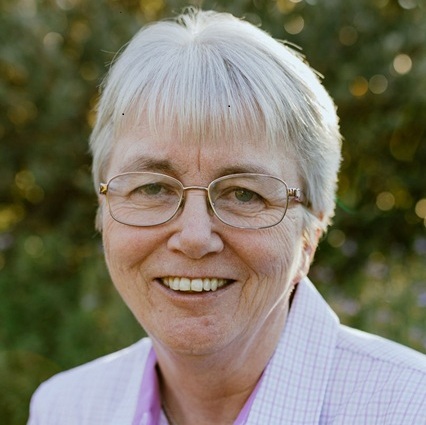
Rev Lily Strachan serves as the Chaplain to Robert Menzies College, a residential college at Macquarie University. She loves chatting with young adults about life, faith, and the goodness of God. Before studying theology, she worked as a corporate lawyer and before that she learnt to love coffee, big books and politics whilst studying at the University of Sydney. She happens to own the cutest dog in the world, a cavoodle named Ziggy.













Comments