
You Visited Me in Prison – reflections on hope from a prison chaplain

My hope is built on nothing less
Than Jesus blood and righteousness
I’m sure that many of us have sung Cornerstone in our worship services. It’s long been a favourite worship song of mine. Those opening words are a powerful testimony – Jesus’ birth, life, death and resurrection bring hope. And yet, for many, hope is hard to find. As a chaplain in two women’s prisons, I work with many women who feel hopeless. They tell me that whenever they have dared to hope for something, those hopes have been dashed. How do they find hope in the darkest of places?
Let’s start by defining what hope is, but first what it isn’t. Hope is not an unrealistic, sunshine and roses feeling that lets you drift through life’s challenges with ease. It is not flimsy, though it can be fragile. Hope is hard and requires effort. Nick Cave, who has had to work hard to maintain hope through the death of two sons, says this
“…hopefulness is hard-earned, makes demands upon us, and can often feel like the most indefensible and lonely place on Earth. Hopefulness is not a neutral position either. It is adversarial. It is the warrior emotion that can lay waste to cynicism. Each redemptive or loving act… keeps the devil down in the hole. It says the world and its inhabitants have value and are worth defending. It says the world is worth believing in. In time, we come to find that it is so.”[1]
The field of Positive Psychology defines hope as “the perceived capability to derive pathways to desired goals and motivate oneself via agency thinking to use those pathways.”[2] If we use this definition, it assumes that people have the ability to set goals, to plan how to achieve those goals and to be motivated to achieve them. For people who have grown up in abusive or neglectful relationships those abilities may have never been learned as children. They may need to learn in adulthood, and it’s hard.
From a Christian perspective, hope is found in Jesus. He offers us hope in our earthly lifetime and the promise of his Kingdom beyond. The four gospels share stories of Jesus bringing hope to those who had none – the Samaritan woman at the well, the demoniac, the blind and the lame. His crucifixion and resurrection provides the ultimate hope – the defeat of death and the promise that “whosoever believes may have eternal life.” (John 3:16) Theologian Jurgen Moltman says “Hope is nothing else than the expectation of those things which faith has believed to be truly promised by God.”[3]
So how do we respond to those who feel they have no hope? As a chaplain in two women’s prisons I meet many women who have lost hope. They share stories of neglect and abuse, of being let down by the systems and people they had once hoped would support them. Their experiences have told them that hope leads to disappointment and trust leads to betrayal. Most women in prison have experienced homelessness, addiction, violence or mental health issues – many have experienced all of these.
Our society is ill-equipped to respond to these circumstances. Services are overwhelmed and under-resourced. Instead of the homeless person being provided with safe housing or the person in addiction being provided with a place in rehab, they are often imprisoned. Instead of a place in a refuge or a bed in hospital, women who have experienced violence or are suffering a mental illness receive a sentence. Any wonder they lose hope – their most pressing needs are not met, and they lose their humanity. They become a number in a system that is even less equipped to respond to their complex needs than the limited supports in the wider community.
Beyond food, shelter and clothing (which thankfully are provided by the justice system, often in contrast to the lives the women live on the outside) the most pressing need for women in prison is to be fully seen and known. They need to be able to share their stories without judgement, and be met with compassion. They need to see that their value is inherent and not diminished in any way by the circumstances that have led them to prison. They need to experience the same love that Jesus showed the people he encountered.
So many women have told me that they think their crimes mean God no longer loves them, that he has passed judgement and they can no longer come to Him. Their image of God is one of anger and condemnation. I tell them what God himself told Moses,
I am slow to anger
and filled with unfailing love and faithfulness.
I lavish unfailing love to a thousand generations.
I forgive iniquity, rebellion, and sin. (Exodus 34:6-7)
To be able to reimagine God as loving, forgiving and faithful, they need to be able to experience that in human form. They need people who walk beside them, be faithfully present on their good days as well as their bad. They need people who will listen to them, cry with them and laugh with them. They need people who will hold their stories with care and see their worth and value. As Nick Cave said in the quote above, they need “loving and redemptive acts”. As Christians, we would say that they need to experience grace. We know the transformative power of God’s grace, and the hope that it provides. As a chaplain, I have the privilege of introducing that grace to women who may never have experienced it and watching God’s transformation.
Hope is forward facing and future-oriented, but it does not deny the past. The Serenity Prayer is familiar to a lot of the women I work with – if they attend AA or similar groups they will have heard it and said it at the end of meetings. For some, it’s the only prayer they’ve ever prayed. I find it a great way to encourage women to explore hope.
God, give me the serenity to accept the things I cannot change – we cannot change our past, we cannot change other people, and in prison we cannot change our environment.
The courage to change the things I can – we can only change ourselves, focusing on our healing and rebuilding our strength while we are inside. We can change our present trajectory. We can learn to trust with appropriate boundaries, and that takes courage.
And the wisdom to know the difference – It is in accepting our past with serenity and courageously changing ourselves that we find hope for the future.
In Matthew 25, Jesus said that those who visited him in prison will inherit the Kingdom. When his followers were confused and asked when they did that, he replied that whatever was done to the least of his brothers and sisters was done to him. As I visit the women I work with, I remember that each is worthy of love, having been created in the image of God. With that in mind, I work to bring each one of them the compassion and care that Jesus brought, and my prayer is that I help them to hope.
So many people in this world are lacking hope – both behind bars and in our daily lives. Do you know people who have lost hope? We all do. We can all construct metaphorical prisons that trap us and steal our hope. I encourage you to visit them, to listen to their stories and embody Jesus for them. It is hard, your heart will break, but God will equip you.

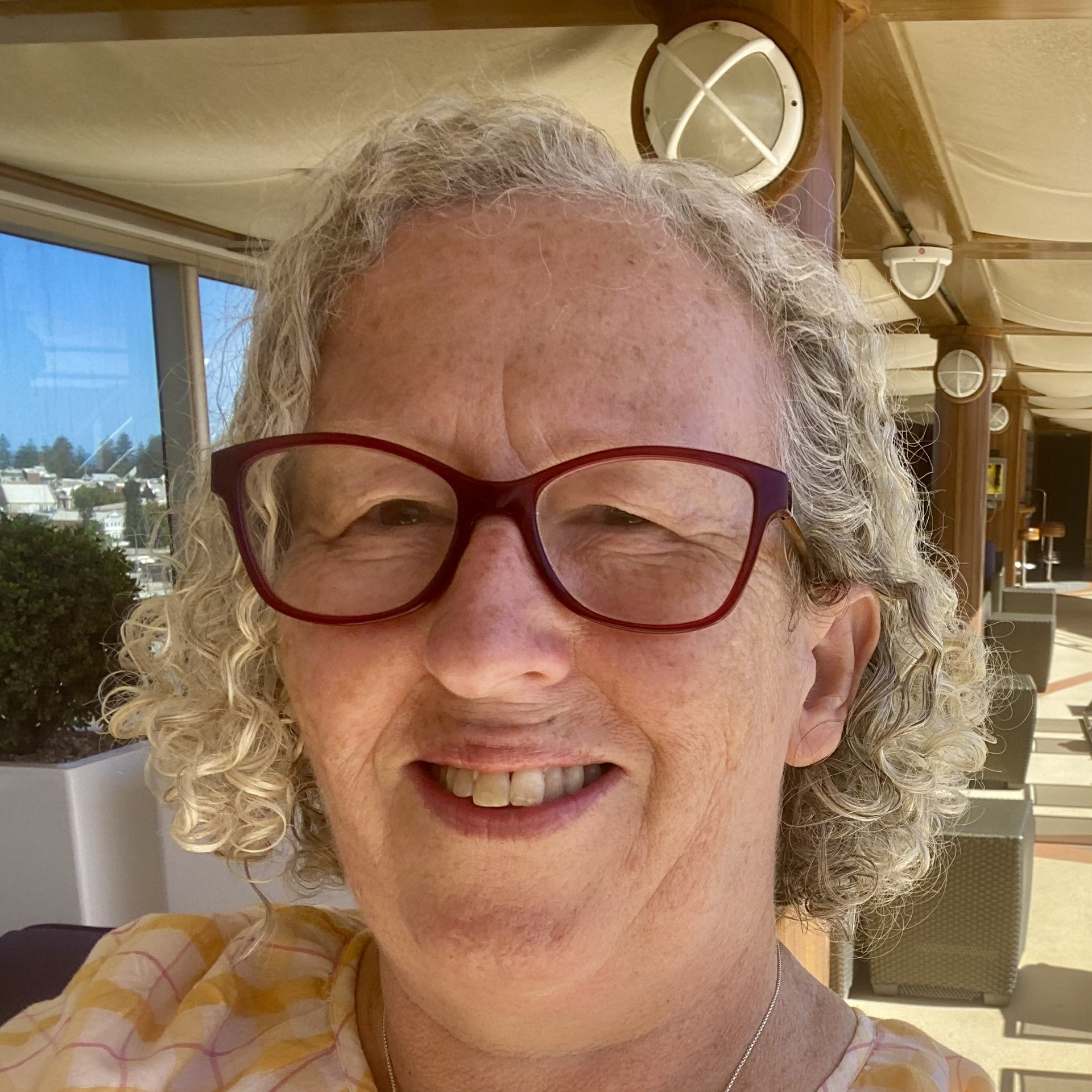
Captain Alison Templar is a Salvation Army Officer (pastor) serving as a chaplain in Victoria’s two women’s prisons. She recently completed her Master of Theological Studies at the University of Divinity. When she’s not working or studying, she loves going to the movies, drinking coffee in nice cafes and spending time with her family and friends.
[1] Cave, Nick. “Do You Still Believe in Us?” The Red Hand Files, 2022. https://www.theredhandfiles.com/do-you-still-believe-in-us/.
[2] Snyder, C.R. “Hope Theory: Rainbows in the Mind.” Psychological Enquiry 13, no. 4 (2002): 249–75.
[3] Moltmann, Jürgen. Theology of Hope: On the Ground and the Implications of a Christian Eschatology. 2nd impr. London: SCM Press, 1969.















Comments