
Australian Evangelical Anglicans and Evangelical Organisations Before and After 1970

I recently read Beth Alison Barr’s book, The Making of Biblical Womanhood: How the Subjection of Women Became Gospel Truth (Brazos, Grand Rapids, 2021). It is her argument that evangelicals in America were generally accepting of women in leadership before ‘second wave’ feminism began to get a good hearing in the churches in the late 1960’s. Before this time women preached in churches, ran evangelistic rallies, led student groups and Bible studies, went out as pioneer missionaries and the list could go on. Men were culturally dominant but for evangelicals, gender was not a determining issue. Giftedness could triumph over gender. There was no in-principle theological objection to women in leadership or teaching the Bible until ‘second wave’ feminism caused a reaction and theological pushback.
Beth Alison’s book made me start thinking about what has changed for women in the church in Australia in the post 1970 period. When I began to write this article, I asked friends around about my age, 81, to tell me about the changes in the church that they noted, before and after 1970, especially in relation to women.[1] I was surprised by their responses. What came to mind first of all for them, as it did for me, were not the changes that had taken place in regard to women, but other changes in the church and in the Christian organisations that were so important to them and me. This got my planned article off track in two ways.[2] First, they side-tracked me into saying something about how church services on Sundays have profoundly changed in these years. And, second, they digressed me into saying quite a lot on the changes that had taken place in para-church organisations, such as the Church Missionary Society (CMS); IVF/AFES (the evangelical Christian groups on university campuses), and Scripture Union (SU).
Making 1970 the transition point is somewhat arbitrary, but on this Beth Alison Barr and I are basically in agreement, even if her timing is less specific. In giving this date, I am not thinking of a change that a flick of a light switch makes. Rather, to use another metaphor, I am thinking about the change that occurs the moment the first light of day is seen. It is the point where a profound change begins. It is the start of another day.
Looking Back
Before 1970, Australian churches were well-attended, had large Sunday schools, active youth groups and church services were formal. Anglican clergy robed and did almost everything up front; the 1662 Prayer Book structured the services; hymns were found in hymn books and sung to organ music, and most churches had a robed choir. In 1970 change began. A committee was appointed to produce a new Anglican Prayer Book in modern English, which after trial usage in parishes, was published in 1978; youth groups began singing modern Gospel songs accompanied by a guitar. In the next 10 years more changes followed. Gospel songs accompanied by one or more guitars and often drums were introduced into many church services, and overhead projectors and screens appeared. Clergy began only wearing a clergy collar on Sundays and later not robing on Sundays. And sadly, from 1970 onwards, slowly at first, church attendance and the number of children and young people involved began to decline in numbers.
The changes I have just mentioned are remembered most vividly by people of my age, but the most profound change has been was in fact in relation to women. This change has involved a change in both theology and practice. Australian Christians in the late 60’s and early 70’s became aware that women’s liberation flowering in Western culture could not be ignored. Books by Christians putting the case for the liberation of women in the churches began appearing. They demanded that the full equality of women be affirmed as it was in the Bible and women be allowed to be ordained. In 1966, in America, Krister Stendahl published his hugely influential book, The Bible and the Role of Women.[3] In 1973, the Australian biblical scholar, Barbara Theiring published her book, Created Second, Women’s Liberation in Australia. [4] And in 1977, I published, Women and Their Ministry: A Case for Equal Ministries in the Church Today.[5] In 1992, in Melbourne, Elizabeth Alfred, was the first Australian woman to be ordained to the Anglican priesthood. This call for the ordination of women was bitterly opposed by many male clergy (and still is), sometimes supported by their wives, and almost always in every synod by at least one very able and articulate woman, who was on numerous diocesan and parish committees.
In my 50 years as a minister, I have lived through all these changes, and they all caused congregational conflict that I had to manage, as did other clergy. The Anglican Church today is to be contrasted with the Anglican Church pre-1970 in numerous and important ways. What I write in this article is not a history written by someone living long after the events described, but rather an historical account of what has taken place in my lifetime and what I have personally experienced.
My Recollections
In early 196I, a friend invited me to attend a ‘guest service’ at Holy Trinity Church, North Terrace, Adelaide, where Lance Shilton was the Rector and preacher that night. Holy Trinity was a large, well-attended, multi-staffed, city church. I decided on that Sunday to become a Christian. After his time in Adelaide, Lance Shilton became the Dean of St Andrews Cathedral, Sydney. Some five years later, I married Lynley Butler who had been a member of Holy Trinity for several years before I joined. We thus have a collective memory of those days prior to 1970. The Rector preached most weeks and male curates once or at the most, twice a month. He and his curates were always robed at services, and there was a robed choir. Lance Shilton was on the State and Federal Church Missionary Society (CMS) committees and a number of Trinity men and women from time to time offered for missionary service. He always spoke highly of the women who were pioneer missionaries and teachers at Bible Colleges overseas. Once or twice a year one of these women would preach in church. The State Secretary of CMS, South Australia, at that time, was Rene Jeffries. She spoke at Trinity periodically and at other churches, preaching as a CMS deputationist. Like many churches in the 1960’s, Holy Trinity had a large youth ministry. There would have been at least thirty in each of the three youth fellowships (the junior, intermediate and senior). Lynley (now my wife) was appointed by ‘Mr Shilton’ first as the co-leader of the intermediate fellowship, and later of the senior fellowship. In all the three fellowships there was a male and female leader. There was no thought that the male leader was set over the female leader, or that there were some things a male leader could do, such as lead a Bible study, that the woman co-leader could not do.
From Trinity, I went to Moore Theological College Sydney, where I studied from 1963 to 1967. In 1966, Lynley and I were engaged and, in that my final year, she came to Deaconess House, Sydney to study. In my years at Moore College, I cannot recall one lecture, yes, not one, where the question of women in church leadership, or preaching, or their ordination came up. It definitely was not positively endorsed, but many of the trainee deaconesses preached in their parish appointments. Mary Andrews, the Principal of Deaconess House, an esteemed and venerated former missionary and church planter in China, openly and frequently spoke in favour of the ordination of women and she championed the ordination of women ahead of most others. She regularly preached in churches on Sundays. I never once heard any criticisms of this gifted and articulate woman in Sydney, definitely not by Dr Knox who knew her views well and worked closely with her.
On arriving at Moore College, I was told to buy a cassock and surplice and a 1662 Prayer Book and to put my name down on the list of parishes seeking a Sunday ‘catechist’. These required purchases remind us that how Anglican church services were run had not changed in over 300 years. The Principal, the staff, and students taking part in Moore College Chapel services all robed. Before 1970, all Anglican clergy around Australia robed and wore a clergy collar as a normal thing. My first two years as a ‘catechist’, were spent in the parish of Girraween and Toongabbie, outer Western Sydney suburbs. A trainee deaconess, Peggy Roberts, was also appointed and we travelled to the parish together each Sunday. There were three churches in the parish and I always led and preached at one service in one church every week. Peggy, came to the church services morning and night and made pastoral visits on Sunday afternoons. She did not preach by her own choice but the rector of the parish invited her to do so. Many other student deaconesses did preach in their parish appointments.[6] In my second ‘catechist’ position at St Albans, Lindfield, a large North Shore Sydney parish, the Rector, Ray Weir, saw no problem with women preaching in church and two or three times a year a woman preached, often a returned missionary.
David West who was in my year at Moore College, and on my request read this article in draft, told me that he too does not remember Dr Knox ever saying anything on women teaching/preaching in church, or on their ordination. He added that when he was the Rector of Naremburn in the Diocese of Sydney, ‘I had as my curate in 1974, Deaconess Patsy Dahl, who shared the preaching/leading role with me.’ His bishop knew of this and offered no criticism. In at least six responses to the first draft of this article, from deaconesses and clergy who trained with me, at or about the same time, said they too could not recall Dr Knox ever speaking against the ordination of women or of them preaching. And they all said women sometimes preached in Sydney churches in the 1960’s and 70’s, without a word of criticism.
I did well in my studies at Moore and became a protégé of Dr Knox. He appointed me as ‘senior student’ in my last year, a high honour. After four years in parish ministry in two curacies, he personally awarded me a scholarship to study for a research MA at Durham, University, England. He wanted me to come back and teach at Moore College. I, however, wanted to be primarily a pastor and accepted an appointment as the chaplain to the University of New England where I would be in charge of the well-attended University Chapel. I began my ministry at Armidale late in 1975 when the debate about the ordination of women was just getting underway in the Australian Anglican Church. Before I arrived, previous chaplains had always taken the morning and evening services in robes. With ‘cap in hand’ I asked the bishop if I could lead the evening service unrobed. I had seen services in England taken by clergy in street clothes. He agreed. I was ahead of my time in this.
Having plenty of energy and a fertile mind, I began writing articles for church papers and as the debate on the ordination of women heated up, I wrote my first journal article on ‘Jesus and Women,’ [7] (published in 1976) without any thought that I was stepping on dangerous ground or being controversial. My MA thesis had been on the church in the theology of St Luke and in working on this, I had discovered that Luke had the most positive view of women of any New Testament author. Before posting it off, I sent it to Dr Knox, my mentor and friend, for his critical comment. He said it was very good, but I next needed to work on Paul and women. I took his advice and wrote a little book I have already mentioned, Women and Their Ministry: A Case for Equal Ministries in the Church Today (1977). Again, I sent him the manuscript before sending it off to the publisher. He wrote back warmly commending me for writing a ‘good book’, exploring an important issue, but said he was not convinced. My writing on what the Bible says about women and their ministry never led to any break with Dr Knox. We remained good friends and could discuss the ministry of women without any rancour. He never accused me of denying the authority of Scripture. When I was studying in Tyndale House, Cambridge, on my long service leave in 1986, Dr Knox was also there working on a book. He had just retired as Principal of Moore Theological College. We often went for a walk together for a break from study. In our conversations, he agreed with me that the post-1970 emancipation of women was one of the most momentous social changes in human history. It had forced all evangelicals to think long and hard on this issue. One day, he invited Lynley and me to have lunch with him and Ailsa, his wife. We had a very happy afternoon with them. We spoke about the book I was writing, Patterns of Ministry Among the First Christians,[8] and he thought my work was very interesting and worthwhile.
It is my opinion that Dr Knox was not dogmatically opposed to women in leadership and preaching before 1975, but never openly affirmed this. He was a man of his age and a social conservative. He only became opposed in principle after being on the working party set up by the national Anglican Synod to explore the question of the ordination of women. The findings of this committee were published in 1976 in a little book called, A Woman’s Place.[9] In this publication, Dr Leon Morris, the Principal of Ridley College, Melbourne, an evangelical seminary, Australia’s foremost New Testament scholar, came down in favour, arguing there were no significant theological or biblical objections to the ordination of women, Dr Knox came to the opposite conclusion. It was only from this time that we had two warring sides in the evangelical community in Australia on the question of women leading churches. Tragically and unpardonably, those who took up the cudgels in opposition to women in leadership began arguing that to endorse the leadership of women was to deny ‘what scripture clearly taught’, thus to reject the authority of scripture. The debate then became bitter and any conversation on what the Bible actually taught on women could not be allowed by the so-called ‘complementarians.’ This of course put Dr Leon Morris and me into a box labelled ‘heretics.’
[10])
On Dr Knox, I must add, not everyone saw him as I did. Many had different opinions. I acknowledge this. I have only given my view. Some of the women at Deaconess House in my time thought he put women down. Almost everyone agrees that he played a very political game in the diocese of Sydney, always seeking to get his point of view in one way or another adopted. And it cannot be denied that after he and Dr Morris parted company on the ordination of women in 1977, he became dogmatically opposed to women in leadership. More than anyone else, he is responsible for the dominance of the complementarian position in the diocese of Sydney. Marcia Cameron in her sympathetic biography, calls him, the ‘father of contemporary Sydney Anglicanism.’[11]
When I left Moore College, I was a social conservative without a doubt. I thought things were as they should be. Men should give leadership in the world and the church. I was quite happy to use the 1662 Prayer book at our marriage where the bride promises ‘to love, honour and obey’ her husband. I certainly was not in favour of the ordination of women for many reasons, none of them of a theological nature. I had not heard in my studies, and did not think, that the Bible clearly forbade women for all time in all cultures from leading and teaching in the Christian community.
David and Rosalie Nettelbeck’s recollections
David and Rosalie, have been good friends with Lynley and me for almost a lifetime. We first met at Holy Trinity, Adelaide. Today we get together once a fortnight. Both David and Rosalie trained as teachers and in 1964 they went as CMS missionaries to Tanzania where they worked for thirteen years. They tell me that when they were first appointed they taught at the Teachers College in Katoke, alongside the remarkable Barbara Spring, one of the longest serving and most significant CMS missionaries in Tanzania. Barbara taught mature age trainee teachers, led the African Revival Fellowship and preached from time to time at the village church they all attended. After her stint teaching at Katoke, Barbara became the Principal of the Diocese of Victoria Nyanza Bible School for about 10 years, where she trained mainly men to be pastors and evangelists. In these years, David and Rosalie never heard one word questioning what Barbara and other women missionaries who had similar ministries were doing. They were seen as heroic women, faithfully and obediently serving Christ and his church, and were lauded as such when they returned on furlough to Australia.
David studied for his BA at Adelaide University in the years 1956–59 where he was very active in the Evangelical Union (EU) of the InterVarsity Fellowship (IVF). He tells me that there were just two staff workers for all of Australia, one for Universities and one for CAEs: Ian Burnard and Charmian Bentley. They visited EU groups for a week about twice a year to encourage, teach and pastor mainly the leaders. David says that in 1959 he worked with other EU members to ‘organise a weekend conference at Mylor in the Adelaide Hills. Charmian led the Bible studies on 2 Timothy and preached at the Sunday morning church service.’
When David and Rosalie returned to Australia in 1976, they continued to be active in CMS and they still pray every day for CMS missionaries and staff. David was on the state committee first in South Australia and then when they moved to Victoria on the Victorian committee for 30 years and the Federal Candidates Committee for 10 years. He tells me, in all these years CMS gladly accepted and sent out men and women as doctors, nurses, teachers, pioneer evangelists, church planters, lecturers in Bible Colleges and pastors to clergy in the country in which they worked. There was no sex discrimination. CMS were proud of its affirmation of women in leadership positions. He cannot recall hearing of any biblical principle that excluded women from leading and teaching the Bible until some 30 years ago Such teaching was certainly not endorsed by CMS.
Ian Hore-Lacy, another friend in Melbourne, who has known me as long as the Nettelbecks, gives much the same story about EU/IVF. He tells me that he was an IVF staff worker from 1964 to 1968. ‘In my time’, he says, there were four staff workers, two men and two women for the whole of Australia. ‘I recall no distinctions at all regarding functions.’ Tom Slater, a Melbourne friend, of whom I will say more below, likewise makes this point. He says that while studying at Monash University between 1963 and 1965, he remembers well the visits of staff workers, both male and female, who were ‘mentors and advisors’ to the leaders of the university EU groups and adds, ‘gender was never an issue.’
When David and Rosalie returned to Australia in 1976, they continued to be active in CMS and they still pray every day for CMS missionaries and staff. David was on the state committee first in South Australia and then when they moved to Victoria on the Victorian committee for 30 years and the Federal Candidates Committee for 10 years. He tells me, in all these years CMS gladly accepted and sent out men and women as doctors, nurses, teachers, pioneer evangelists, church planters, lecturers in Bible Colleges and pastors to clergy in the country in which they worked. There was no sex discrimination. CMS were proud of its affirmation of women in leadership positions. He cannot recall hearing of any biblical principle that excluded women from leading and teaching the Bible until the 1990’s. Such teaching was certainly not endorsed by CMS.
Another female missionary who preached, taught the Bible and pastored male clergy
I have above spoken of Barbara Spring’s remarkable ministry in Tanzania and Mary Andrew’s heroic ministry in China. I could give numerous other examples of women missionaries running churches, preaching in churches and teaching in Bible and Theological Colleges in the years when women in church leadership was not a contentious issue, and now I give one more. Sylvia Jeanes attended lectures with me at Moore College in 1964 and 1965 as a student at Deaconess House. She was a very able and self-confident woman. She offered to CMS for missionary service and after further study at St Andrews Hall, the CMS missionary training college in Melbourne, she was sent to North Borneo. She had a year of Malay language study and orientation before she was sent to the Epiphany Mission in Tongud, a 300-mile journey up the Kinabatangan River in a dugout canoe, powered by an outboard motor, a 4-day journey. In Tongud, she taught in the English medium mission school. In due course, Malay replaced English. With the Malay culture on the ascendency, all foreign missionaries and clergy were told to leave the country, except for Sylvia and her fellow CMS missionary in Tongud, Marianne Wise, a nurse.[12] In this vacuum, the bishop appointed Sylvia as ‘the chaplain’ to the Tongud region. He asked her to supervise and teach the male ‘catechists’ who were now in charge of parishes and in due course, she started a Bible School in Tongud. She even taught Greek to the more able students so that they could read their New Testaments in the original language. In her time supervising the Tongud churches, the number of congregations increased from 5 to 28. She did all this in addition to being the primary school principal in Tongud. She inspired many young men to become ordained ministers and the bishop sent most of these men to overseas theological colleges to complete their training. One came to Ridley Theological College, Melbourne (William Vun),[13] others went to theological colleges in Sarawak, Singapore and the Philippines. Later, as more and better roads were built in the Tongud region, the Bishop provided Sylvia with a 4-wheel-drive pick-up truck to help her get to, encourage and support those running churches and to preach. Sylvia has now retired (well partly!) but has chosen to continue living in Sabah. What a woman! What a Christian leader. I am sure on entering Heaven, she will hear Jesus say, ‘Sylvia, well done good and faithful servant’.
The Anglican Church
I have already spoken from a personal experience of my recollections of Anglican church life prior to 1970. Male clergy led and preached at almost every service. Occasionally, in many churches a layman or laywoman might preach. Often, they were missionaries on a deputation, but not always. However, in some churches in this period, it was unknown for lay people of either gender to take part in anything but a Bible reading were unknown. Before 1970, Australia was a very male dominated society. Very few women went on to university, worked outside of the home, or were in politics. The one opening for many gifted and able Christian women who felt called to preach the Gospel was overseas. On the mission fields of the world where few men wanted to go, they could do almost anything – evangelise, plant churches, preach, pastor indigenous clergy, teach in Bible Colleges, etc. Back home they were lauded for their faithful and heroic ministry.
Today, everything is so different and so varied. In every diocese of the Anglican Church of Australia women are ordained and in charge of parishes with the notable exception of Sydney Diocese and, the Sydney-affiliated Dioceses of Armidale and North West Australia. In many, if not most evangelical parishes in Australia, the clergy do not robe at services, or at any time wear a clerical collar. In most of the evangelical churches I go to, the clergy dress in up-market casual clothes. The music is provided by a band and led by one or more singers. Parts of the Anglican Prayer Book are usually used, but not always, and these are put up on overhead screens. There is not An Anglican Prayer Book or hymn book in sight. The words of hymns and songs, like the prayers, are on an overhead screen. If the church building has a pulpit, it is likely to be unused, or removed sooner or later. Sermons are given from a simple wooden lectern centrally located.
In Sydney and Armidale where synods have repeatedly rejected the ordination of women and the dominant view is that women should not preach because it is forbidden in principle by the Bible. Their practice is, however, not consistent with their ‘male headship’ theology. One informed Sydneysider told me in writing that in about 30 Sydney parishes out of more than 360 parishes in Sydney Diocese, women are allowed to preach and do. In the Diocese of Melbourne, where I now live, about 25 out of the 211 parishes have a complementarian Vicar who makes his views known in sermons and in his practice. Women do not preach, and they are not allowed to lead mixed groups of adults in those parishes. However, in most Melbourne parishes, things are very different. Some, have a Vicar who is a woman, some have a female curate and in most, women often lead the service and sometimes preach. Nothing is ever said about ‘male headship.’
In Australia at this time, evangelicals on the whole accept that services will be informal and the clergy casually dressed. When we have taken American Episcopalian church members, some clergy, who have been staying with us to our very informal parish, they are gob-smacked. They cannot believe they have been to an Anglican Church. They are used to robed clergy, liturgical services, sung responses, and organ music. When we tell them the large Sydney Diocese does not ordain women, they are equally gob-smacked. Putting the shoe on the other foot, I was very surprised by what happens in services in the America Episcopalian churches. In 2016, I spent a week teaching at the evangelical Trinity Episcopal School of Ministry in Ambridge, Pennsylvania in 2016 This seminary was established by the renowned scholar/preacher John Stott and the Australian bishop Alfred Stanway in 1975. I was invited to teach a week-long MA/D.Min. course on the historic doctrine of the Trinity because the staff could see the new form of Arianism, dominant among American evangelicals, was gaining support among evangelical Episcopalians. At the daily chapel services, which Lynley and I attended, and at one I preached, everyone who led wore clergy robes, the responses were sung and we had hymn books and organ music. The American evangelical Episcopalians, I learnt, thought their liturgical worship was one of their great strengths that attracted people to join them.
Most Australian evangelical Anglicans are not of this opinion. We think informality in church services is a strength in our culture. It makes church more accessible to Australians. We Aussies on the whole are not into formal dress, lofty titles, and processions.
The Church Missionary Society.
Barbara Spring and Sylvia Jeanes, who I discussed earlier, were both sent out and supported by CMS, Australia. The Church Missionary Society (CMS) was founded by members of the Church of England in 1799, to recruit, train and send missionaries to places where the Gospel had not been preached. An auxiliary branch of CMS was established in Australia in 1825, but only after Federation in 1916 was CMS Australia constituted. The first Australian missionaries, the sisters, Topsy and Nellie Saunders were sent out by CMS Victoria in 1895. Two years after their arrival in China, they were martyred. Later, their mother and stepsister went to China to carry on their work and remained there until their deaths. From the very beginning, until recently, Australian CMS in no way has discriminated against women. They have been thankful for and affirming of women pioneer missionaries who preached the Gospel, founded churches, and taught their converts.
The CMS Federal Office and the NSW/ACT Branch share the same office space in Sydney and that branch has the highest number of missionaries from any State Branch. The Sydney Anglican Diocese therefore has a very significant financial and theological influence over the whole Society. Nevertheless, the CMS Federal Training College, St Andrews Hall, is located in Melbourne and has just been rebuilt at a cost of $18 million. CMS Australia, is governed by a Board of Directors (9 men and 3 women) drawn from all States. The Chairmanship of the Board is shared among the State Branches.
In 2021, CMS has overseas and in North Australia 80 ‘missionary units’ – husband and wife or families. There are also 33 single women, and 2 single men. These 115 missionaries are cared for administratively and pastorally by 4 Regional Mission Directors, 3 men and 1 woman, who are based in the Sydney office. They try to visit once a year each of these missionaries.
In the post-1970’s, the sending and supporting of women in leadership roles on the mission field began to be questioned. Today, CMS no longer allows women to be set over men or teach as a general rule. CMS has largely adopted the ‘complementarian’ position but never openly or completely consistently. There are still a few women who do whatever is needed, including preaching and teaching, but virtually nothing is said about this. From the 2021 CMS Prayer Diary, I note that among the women missionaries or wives, the tasks most commonly ascribed to them are ‘the pastoral care of female staff’, ‘ministering to and supporting women’ and ‘counselling female students.’ More than 12 wives and single women, however, have their roles described as ‘Bible and ministry training for evangelists and pastors’ most of whom would be male in the country where they are serving. Some are described as ‘engaging whole families in hearing the Gospel’; ‘discipling and training university students’ with no mention of gender; ‘mentoring students on campuses and the job of one is described as ‘reaching the community for Christ’, another as ‘building up adults in the faith’ and ‘Bible and Ministry training for evangelists and pastors’. Another ‘seeks to encourage and train both local and international students to be disciples of Jesus’. One woman, ordained in Melbourne, was accepted for missionary service in recent times but on the very clear condition that she would never become the Vicar/Rector of a parish while a CMS missionary. She nevertheless in her posting is responsible for Bible teaching and the post-ordination training of local clergy, many of them men.
AFES
Next, I turn to AFES, the Australian Fellowship of Evangelical Students. In 1936, the Australian Inter Varsity Fellowship (IVF) was established to evangelize students in universities. The student-led groups in each university were called ‘Evangelical Unions’ (EU’s). In 1973, IVF was renamed the ‘Australian Fellowship of Evangelical Students’ (AFES) and from then on, the student groups in each university or tertiary institution were called ‘Christian Unions’ (CU’s).[14] I have worked very closely with EU and CU groups over my 50 years in ministry. I have been a university chaplain at two universities. Until recently, my wife and I financially and prayerfully supported an AFES staff worker for many years. Many of the people who have helped me with this article also have had a close association with IVF/AFES. They remember with warmth their days in EU while at university. Like me, however, they also noted a huge contrast between then and now in this ministry to students. I mention three very significant changes that have taken place after 1970.
1. Prior to 1970, IVF/AFES was led collegially by at the most four staff members, one of whom was designated the national secretary, and students in each university were responsible for teaching the Bible, mutual support and evangelism. They appointed their own leaders, the most important being the student president, male or female. In the 5 years I was the Anglican Chaplain at Armidale University. Pat Hayward was the president of EU for two of these years. Today in contrast, AFES is a highly structured organisation with a very large staff, and most of the leadership/ministry in each university is done by staff not students. For my account of the leadership structure of the AFES at this time, I draw on the AFES website.[10] Under the section, ‘governance’, the management of AFES is pictorially depicted as a steep pyramid, a hierarchy. At the top stands the ‘National Director,’ who we are told, ‘has responsibility for management of the organisation and is free to achieve the agreed objectives of AFES.’ The national office is located in Sydney. Then under him are the regional directors in each state or territory, and under them the campus directors at the 50 universities that have AFES affiliated CU groups. In addition, there are about 170 staff workers. The bigger universities have between five and ten staff workers and each one has what is called a ‘ministry apprentice.’ Staff workers’ main responsibility is to teach the Bible and train students in evangelism. There are men and women staff workers and ‘apprentices.’ I have no opinion of this huge change in AFES work. One senior AFES staff person, who did not want to be named, told me he thinks this change has greatly strengthened the AFES ministry to students. An ex-staff-worker I talked to was of the opposite opinion. He told me he thought this change had undermined the independence of each CU group and taken away responsibility from students to lead the ministry on campus.
2. Another huge change is that after 1970, women leading and teaching in AFES work was called into question and widely rejected. In November 2018, the National Director of AFES, with the full support of the national committee, sent to all state directors and campus committees a proposal to make the ‘complementarian’ position the AFES position. The aim of this document was to rule that a woman could not be the National Director, a Regional Director, a Campus Director, or lead a Bible study where men were present. This change was hotly contested by many of the state directors and by many others in the AFES family. Surprisingly, the Archbishop of Sydney, Glen Davies, a complementarian, opposed this move. He said, ‘the [AFES] doctrinal statement should be confined to gospel issues’, and the status and ministry of women is not a Gospel issue. ‘Personally, I consider baptism to be a far more important issue, and a Gospel issue in its practice.’ Almost all AFES staff at the national level are members of the Sydney Anglican Church and a large percentage of other staff around Australia are Anglicans. For this reason, his intervention was decisive. The proposed change was rejected. Despite this fact, the complementarian position continued to be pervasive in the AFES. However, in very recent times unity on this matter has been lost. One AFES staffer told me in writing that at present, ‘Talk about male [only] leadership is a vexed issue within AFES. Many AFES staff would question the idea that men alone should be leaders and Bible teachers.’ Thus today, he said, what happens from university to university varies greatly. Gifted women are getting into leadership positions and teaching. However, he adds, ‘On most campuses, it is true that men do most of the Bible teaching at the weekly Bible talk. Our theologically trained women, do however teach in a variety of other contexts.’
3. A third change must also be mentioned. With the ascendancy of the complementarian position, a theology unknown in IVF/EU groups prior to 1970 gained prominence, as mentioned above. For the first time, AFES leaders began teaching that the Bible clearly forbade women from leading and teaching in contexts where men were present, and this was a universally binding theological principle grounded in the creation ordering of the sexes. Is point 3 above a repetition.
Scripture Union
I now discuss the work of Scripture Union (SU) because all the people about my age who I asked to tell me of any differences they saw between Christian communal life prior to and after 1970, had had a long and positive relationship with SU and wanted to talk about this. Importantly, none of them noted any significant contrast between how SU operated before and after 1970. Like Lynley and me, most of my respondents had worked with SU over the years and spoke from personal experience. I could not leave their input out of this story. One respondent, a Sydney clergyman of similar persuasion to me, said working with SU was ‘like a breath of fresh air.’
In Australia, SU is known for its beach missions in the summer, work in schools (including school chaplaincy) and camps (Camp Coolamatong in Victoria hosts school camps almost every week contacting some thousands of students throughout the year), and Bible reading materials for all ages. Its stated mission is ‘to make God’s good news known to children, young people and families.’
SU Australia, is predominately egalitarian, and this has been a constant. Tom Slater, the Victorian State Director between 1989 and 1996, says that first as a volunteer in the early 1960’s and then from 1969 as a SU staff worker, ‘I was aware of no distinctions in status or function between male and female staff workers.’ In the Victorian branch, Janet Morgan was the state director between 1997 and 2002 and then she went on to be the International Director of SU. In the Northern Territory, Deborah Myers was the director for some years in the 1970s. In Victoria, Ruth Povey, June Slater, Bev Lambie and Helen Gribble, to name just four women staff, led key SU ministries which involved them in Bible teaching, and leading men and women. Other states likewise routinely gave significant leadership and teaching ministries to women.
Over 10 years, when Lynley and I were younger, we were on Beach Mission leadership teams. The annual Beach Missions mobilise large numbers of volunteers as leaders, mostly young adults. They minister to thousands of children on holidays. In Victoria alone in 2019, there were 46 Beach Mission teams involving 800 volunteer workers. In pre-1970 days all beach missions were led by a man and a woman who had equal standing, and this has continued as a general rule. However, nowadays there are in NSW teams led solely by a man, and all public ministry in the mission week is given by men. This reflects the impact of the complementarian commitments of the Anglican Church in Sydney. John Tigwell, who came out from England to be the NSW state director in the 1980’s, told Tom Slater that he was very surprised by how heavily the complementarian philosophy of the Anglican Church in Sydney impacted on the SU in New South Wales
Conclusion
Yes, there are many differences between communal Christian life before and after 1970 but the changes are not always clear cut and uniform. Pre-1970 we all lived in a world where men dominated in every sphere of life and the church reflected this reality to a large degree. Nevertheless, gifted and able women sometimes, in some contexts, were able to transcend this cultural norm. Giftedness could triumph over gender. What this means is that there was no in-principle theological or biblical objection to women in leading or teaching in church or in any Christian organisation. It was just culturally exceptional. Today, we live in a profoundly egalitarian culture, where the equality of the sexes is seen as an ideal, but many churches and some Christian organisations stand in opposition, insisting that women should not lead or teach when both men and women are present on the basis of an unchanging theological principle based on biblical teaching. Women should accept ‘male headship’. This this puts the churches and the Christian organisations who affirm the subordination of women on a collision course with the cultural norm of our day. In response, I cry out to my brothers and sisters in Christ, ‘change course’, you are going the wrong way. This is not what the Bible teaches. If you continue on this course, the Good News – the Gospel - becomes bad news for women. And it suggests that Christianity – if this is what Christians should believe – it is one big put down of women. 27.7.2021

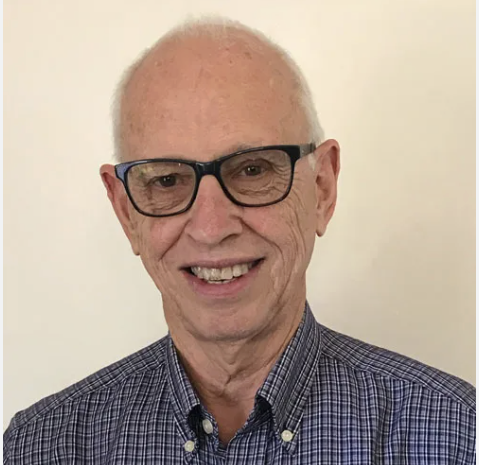
Rev Dr Kevin Giles (Th.D.) is a graduate of Moore Theological College, Sydney and has completed post graduate study in England and Germany. He was in parish ministry for forty years in various ways; associate minister, church Planter, university chaplain, rector of a large multi-staff parish, and in "rebirthing' an inner city church. He has published widely on what the Bible says on the church, ministry, women and the Trinity. He writes with a passion to see the renewal of the church.
[1] I particularly thank David Nettlebeck for his help in many ways with this article. He went the extra mile. I also thank the at least a dozen people who gave me input or critically read the article in draft, making many helpful suggestions.
[2] I asked everyone I contacted to put their recollections in writing and they did but many of them did not want to be quoted by name. [3] Philadelphia, Fortress.
[4] Family Life Movement, Sydney.
[5] Melbourne, Dove.
[6] Interchange, 19, l3l-136.
[7] Australia, Collins/Dove, Melbourne,1998; Second edition, revised and enlarged, Cascade, Oregon, 2017
[8] Edited by L. Morris, J. Gaden and B. Theiring, Sydney Anglican Information Office.
[9] By George Knight, New Testament Teaching on the Role Relationship of Men and Women, Grand Rapids, Baker, 1977.
[10] An Enigmatic Life, David Broughton Knox, Father of Contemporary Sydney Anglicanism, Acorn Press, Sydney, 2006.
[11] Marianne Wise confirmed these details and added to what I already knew.
[12] Who in due course left the Anglican Church to plant an independent charismatic church.
[13] This is by far the most common name but today there are some variants in some places.











Comments